When the trade press covered Weigel‘s latest loyalty refresh, the headline framing was that the Tennessee convenience retailer had swapped a spend-and-points model for one built around visits. Jessica Starnes, director of loyalty at Weigel’s and an active NALA™ member, wants to set the record straight on that point.
“We didn’t move away from the points model,” Starnes said. “We just added a way to be rewarded, with visits.”
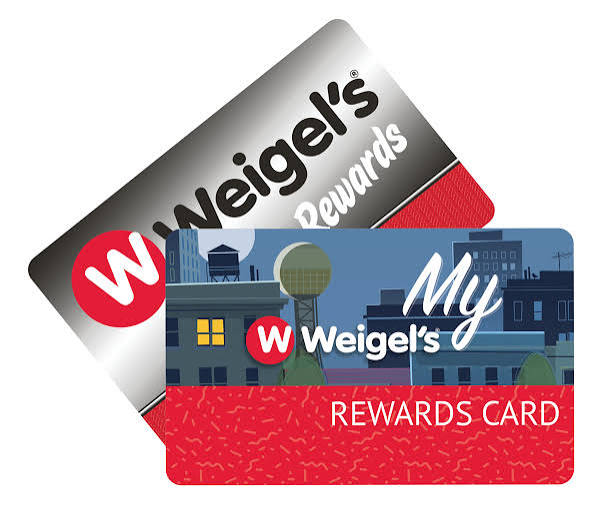
That distinction matters, and it is the first lesson the wider loyalty community can take from what Weigel’s has done. The new four-tier structure, Fan, AllStar, VIP and MVP, sits on top of the existing MyWeigel’s Rewards points program rather than replacing it. Members still earn points on qualifying purchases. What is new is a parallel system that recognizes how often someone shows up, regardless of how much they spend on any given trip.
Rewarding the behavior you actually want
Points programs are good at rewarding spend. They are less good at rewarding consistency. A customer who stops in every morning for a coffee may never build a big basket, yet that person is exactly the kind of habitual visitor most retailers would love to keep. The industry has largely leaned the other way. Starbucks, whose Rewards program once handed out a star per visit no matter the size of the order, switched to earning stars per dollar spent back in 2016, tilting one of the world’s most-watched loyalty programs toward spend. Weigel’s is deliberately moving in the opposite direction, building recognition for the habit itself back into the program.
The tiers reflect it directly. Fan covers 0 to 7 visits per month. AllStar, at eight to 12 visits, adds a free dispensed beverage and a five-cent fuel discount. VIP, at 13 to 24 visits, brings a free beverage, a 15-cent fuel discount and 500 bonus points. MVP, for the roughly 25-plus visits crowd, layers on a free slice of pizza, a 25-cent fuel discount and 1,000 bonus points. The rewards escalate, but the currency being measured is presence, not price.
Counting the visits others ignore
One of the more instructive design choices concerns categories that traditionally sit outside loyalty economics. Tobacco and alcohol do not earn points at Weigel’s, as at many retailers. But Weigel’s still counts those trips as visits.
That was deliberate, and the data drove it. “We saw that our tobacco customers were some of our most engaged with the program, seeing over 60% of transactions using loyalty,” Starnes said. “Tobacco customers visit us 3.4 times more than non-tobacco customers, so we wanted to reward that loyalty.”
Here is a genuinely useful takeaway for any program owner. Your most frequent customers may be transacting in categories your points engine quietly excludes. If your loyalty math renders your most engaged segment invisible, you are effectively training your best customers to feel unrecognized. Weigel’s chose to see them instead. Counting the visit, even when the points do not apply, closes that gap.
Two years of data, then two live tests
If there is a single practice the loyalty community should copy from Starnes, it is her patience with the numbers. The tier thresholds were not pulled from a benchmark deck.
“I have been tracking frequency behavior for almost two years by month, studying spend, frequency, CLV and more,” she said. Weigel’s then ran two frequency-based promotions, both centered on fuel discounts, across the spring and summer, with messaging specifically designed to shift how often customers came in. “The results from those two tests, with the two years of data, helped us land on the current tier strategy and rewards.”
That is the difference between designing a program and guessing at one. Two years of longitudinal behavior told Weigel’s where its customers actually sat. Two controlled promotions told them how those customers responded to a nudge. The tier breakpoints are the intersection of the two. For anyone still setting thresholds by intuition, this is the model to follow.
Badges as a community layer, not a gimmick
The refresh also adds collectible digital badges tied to events, new food items and seasonal programs. It would be easy to dismiss these as decoration, but Starnes frames them as purposeful.
“We will have specific badge launches throughout the year that will require a specific behavior, whether that is a purchase, engagement or something else,” she said. “Badges are meant to gamify tiers and to build a sense of community.”
The gamification is doing two jobs. It gives members a reason to try the new breakfast item or show up for a seasonal push, and it creates shared moments that make the program feel like something people belong to rather than merely transact with. That community angle is where programs like Spotify have found their relevance, turning individual usage into something members want to talk about and share.
An engaged voice in the loyalty community
Starnes is not only building this at Weigel’s. She is an involved NALA member who shares her thinking openly with peers, which is part of why her frank clarifications here are so valuable. Practitioners learn faster when someone is willing to show the working, including the parts the coverage gets slightly wrong.
She will be among the loyalty leaders attending The BIG Handshake Loyalty™ in Chicago on November 10, where conversations like this one, grounded in real data and real design tradeoffs, are exactly the point.
Registration is open at https://www.tbhchicago.com/#/tickets?lang=en.
For the loyalty community, Weigel’s story is a reminder that the most effective changes are often additive, evidence-based, and built around the customer you already have.