Why would Microsoft take the stage at a loyalty conference? The company doesn’t run a points program. There’s no tier status, no punch card, no birthday reward.
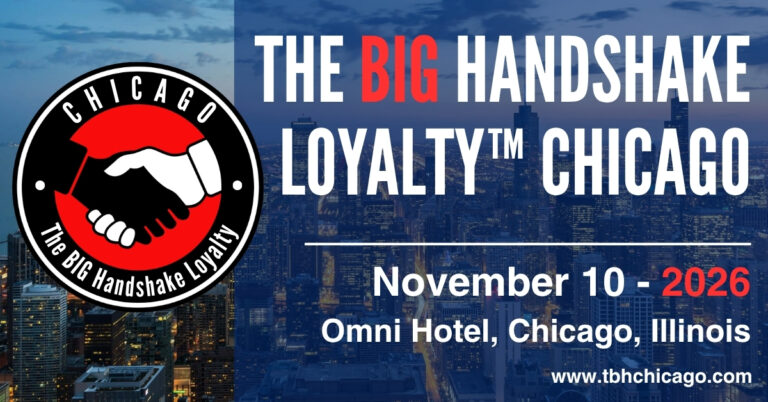
That was the first question we put to Danielle Yedinak, Senior Director in Microsoft’s Customer Growth Engine, ahead of her session with Bond at The BIG Handshake (TBH) LoyaltyTM Chicago on November 10. Her answer is one every loyalty leader should hear.
Loyalty has outgrown the program
“Loyalty is no longer in memberships per se, nor in actual loyalty programs,” Danielle said. “The reality is that we are all trying to encourage loyalty across the breadth of what we’re doing.”
Think about your own wallet. Most of us belong to dozens, if not hundreds, of programs. Danielle’s point is simple: joining is not the same as being loyal. “Our customers are looking for reasons to believe in what they wish to do, not for another program to join.”
She describes today’s market as saturated, full of programs that ask more of the customer than they give back. So Microsoft is flipping the ask. Instead of asking people to raise their hand and sign up, the team invites them to show up with their interests, their excitement, and their passion for the product, and then shapes loyalty around them. In her words, it’s about letting customers lead, “versus them coming in and adapting to the loyalty that we create.”
You can already see this idea at work. Spotify has no points at all, yet Wrapped makes millions of people feel seen every December. Loyalty there comes from relevance, not rewards.
Lead with the customer, not the product
For an engineering company, this has been a big change. “When you work at an engineering company, you oftentimes want to lead with product,” Danielle said.
Microsoft has been working to turn that around. The team now starts with how it can change customers’ lives, and why they can’t do that without the product, rather than starting with why the product matters. It sounds obvious. It’s harder than it sounds. Most brands still default to talking about themselves.
Nobody lives in a box
For organizations without a loyalty program, Danielle says the starting point is understanding who the customer is and what they’re trying to achieve. That means real segmentation built on customer models. It also means accepting that people move between needs from one moment to the next.
Her favourite example is her husband. Microsoft built five customer profiles this year, and he fits all five. He’s getting an MBA. He works at a large corporation. He’s a gamer. He builds apps. He also manages the family finances.
“We like to segment people and go, okay, this is your box, and you’re living in this box,” she said. “Nobody lives in a box. None of us have the luxury of living in a box.”
This applies far beyond tech. How someone shops for groceries on a Tuesday is not how they shop for a holiday dinner. A traveller booking a work trip has different needs than the same person booking a family vacation. The brands that win are the ones that listen to what customers are telling them and meet them in that moment.
AI in every corner of the marketing engine
When you sell AI, you tend to use a lot of it yourself. Danielle says her team has been building with AI internally for about three years, and it now touches every part of the work.
The standout is what she calls synthetic DNA. Her team uses AI to create synthetic customer profiles, then runs them through what are essentially think tanks to see how those customers would likely behave. That gives them a baseline view of the customer without paying for a large round of traditional research.
AI also supports localization, copywriting, and the marketing workflow itself, helping campaigns move through approvals and get out the door faster.
For loyalty teams under pressure to do more with less, that’s worth a close look. Testing an offer or a message against synthetic profiles before launch could save time, money, and a few painful missteps.
Big change, short timeline
So what can attendees expect on November 10? A story about speed.
Danielle and Bond Brand Loyalty will share how Microsoft made a major shift in roughly 10 to 11 months. Only three or four months ago, the business didn’t have clear segmentation across its portfolio. Today it does.
A key part of that journey was what the team calls a “stratifesto,” a strategy manifesto built around a single objective. Danielle will walk through how that document turned into new models and new ways of working.
“You can make a large shift and change in a pretty short period of time when you’ve got the single objective in mind,” she said.
That’s an encouraging message for any loyalty leader waiting on the perfect roadmap, a new platform, or next year’s budget.
Why this session matters
TBH Loyalty Chicago is built for brand-side loyalty leaders who want candid, practical conversations with their peers. Danielle’s session brings an outside view that challenges one of our industry’s oldest assumptions: that loyalty lives inside a program.
You don’t need points to build loyalty. You need to know your customer, meet them in the moment, and give them a reason to believe.
Join us at The BIG Handshake Loyalty Chicago on November 10 at the Omni Chicago. Brand-side attendees join for free. Register here.