
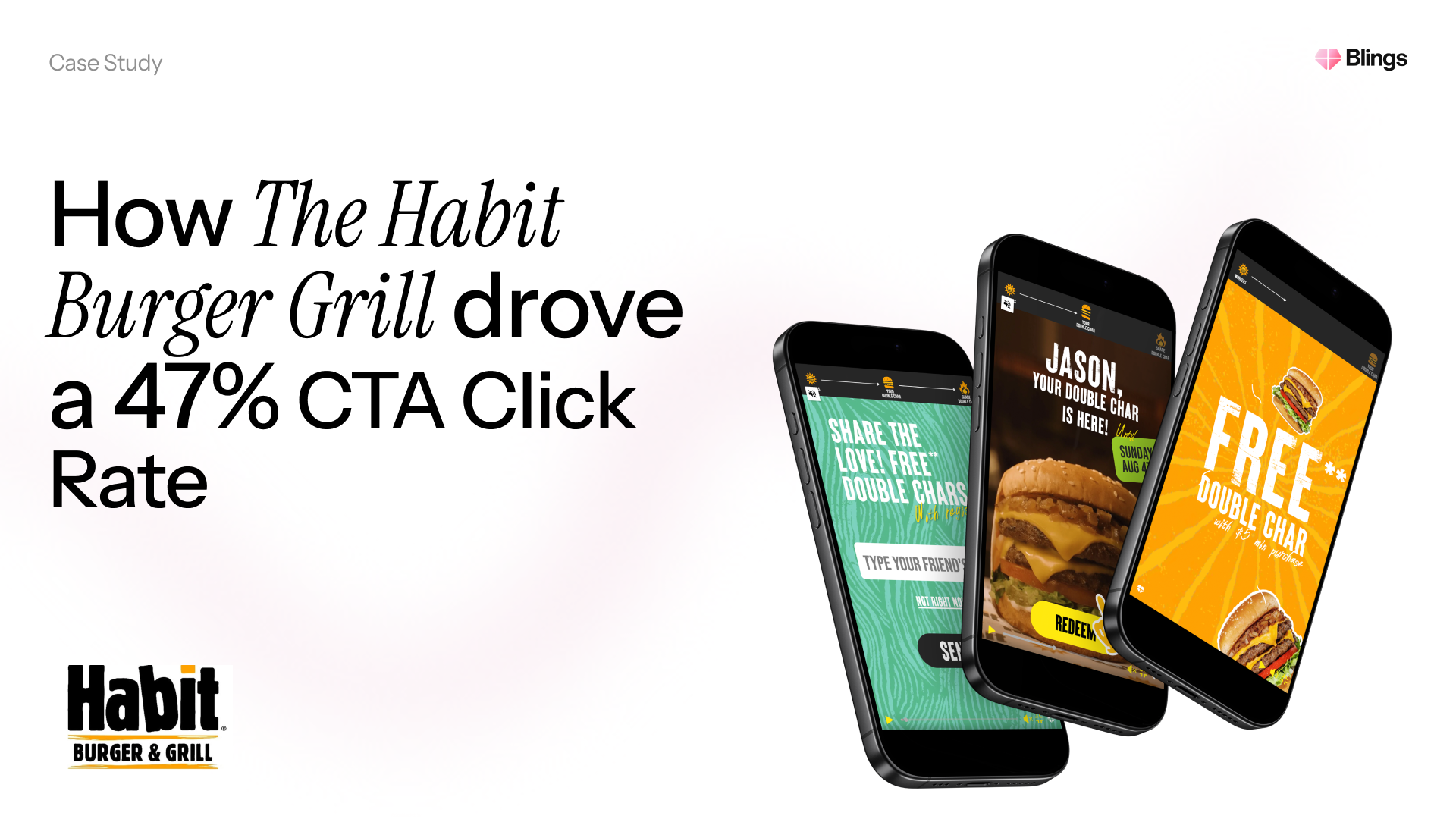
How The Habit Burger Grill turned its members into its acquisition channel
A 47% click-through to loyalty signup is the kind of number most North American operators would assume is a typo. The Habit Burger Grill, a California-headquartered QSR known for its grilled-to-order burgers, hit it last year on a 10-week peer-to-peer referral campaign. Existing members shared at a 53% rate, more than ten times the cited industry benchmark of 4%. Recipients watched an average of 38 seconds, or 96% of the personalized video they received. Net-new member conversion landed at 3.17%, a 44% lift over Habit’s prior referral performance, and the program stayed compliant with North American anti-spam standards across the entire
run. The loyalty team had run referral programs before. None had performed like this. Here is the playbook they built, what made it work, and what loyalty leaders in retail, financial services, travel, and telecom can borrow.
The business problem
A 47% click-through to loyalty signup is the kind of number most North American operators would assume is a typo. The Habit Burger Grill, a California-headquartered QSR known for its grilled-to-order burgers, hit it last year on a 10-week peer-to-peer referral campaign. Existing members shared at a 53% rate, more than ten times the cited industry benchmark of 4%. Recipients watched an average of 38 seconds, or 96% of the personalized video they received. Net-new member conversion landed at 3.17%, a 44% lift over Habit’s prior referral performance, and the program stayed compliant with North American anti-spam standards across the entire run. The loyalty team had run referral programs before. None had performed like this. Here is the playbook they built, what made it work, and what loyalty leaders in retail, financial services, travel, and telecom can borrow.
The Campaign
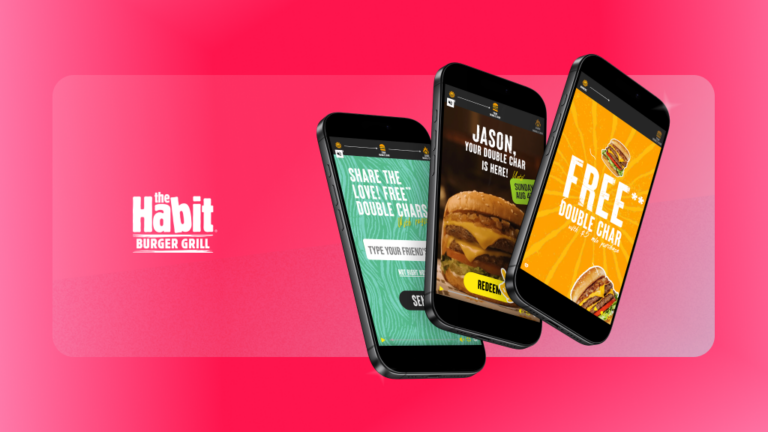
Habit ran a 10-week Refer-a-Friend program built on personalized video. Each existing member received a short, member-specific asset addressed to them by name and referencing their recent activity with the brand. The member could then share a co-branded version with friends, with each shared video generated on demand and personalized to both the sender and the receiver.
The mechanics were intentionally simple:
• Members earned a $10 reward for every friend who joined the program.
• Friends received a free Charburger when they signed up.
• Every share was member-initiated, which kept the campaign compliant with North American anti-spam standards.
The Results
The campaign produced numbers loyalty leaders rarely see on acquisition channels.
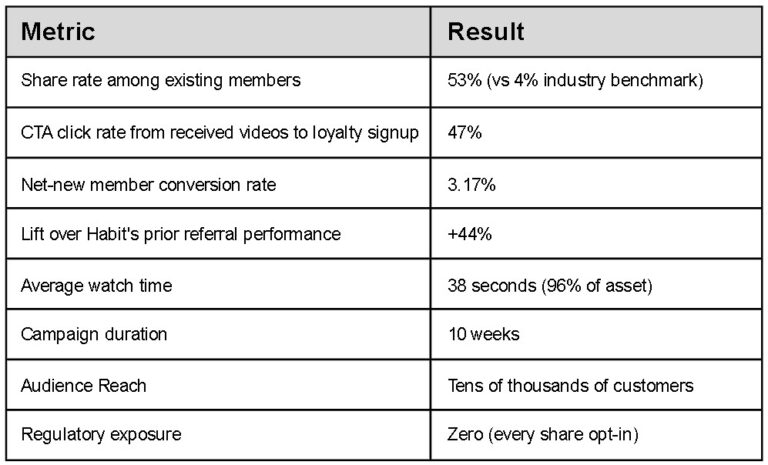
Three things made this referral program work where earlier referral attempts had not.
What worked one: dual personalization on every share
Most personalized referral programs personalize the sender. The receiver gets a generic asset with a name field swapped in. Habit personalized both sides. The receiver saw a video that referenced the friend who sent it, the relationship between the friend and the brand, and an offer scoped to the receiver’s likely first visit. That dual personalization is the part most programs skip, and it is the single biggest reason the campaign hit a 47% click rate. The same logic shows up at the share layer: members shared at 53%, against a cited industry benchmark of 4%, because the asset they received was about them, not about the brand. A referral campaign is only as personal as the asset the receiver actually opens, and only as shareable as the asset the sender actually receives.
What worked two: every share was member-initiated
Habit built the program so that every share happened on the member’s terms, not the brand’s. Members chose who to send to, when, and through which channel. That choice changed two things at once. It made the campaign compliant with anti-spam standards by default, and it changed how recipients evaluated the message. When a brand sends a signup pitch, the recipient evaluates it as marketing. When a friend sends one, the recipient evaluates it as a recommendation. The gap between those two framings is large enough to reset the unit economics of an acquisition program.
What worked three: assets generated at the moment of open
A 10-week program with tens of thousands of unique recipients cannot be solved by pre-rendering. Pre-rendered creative locks in the data that existed at the moment of build, and by the time the recipient presses play, that data has decayed. Habit’s campaign worked
because the assets generated on demand, pulling fresh customer data into a personalized video at the moment the recipient opened the link. That architectural choice closed what the loyalty industry calls the Insight-to-Action gap: the lag between knowing what a customer is likely to respond to and reaching them with a message that reflects it. It is what made the program safe at scale, compliant at scale, and personalized at scale all at once.
What did not work
Earlier variants that personalized only the sender, leaned on pre-rendered video, or treated referral as a one-touch incentive underperformed against the dual-personalized, on-demand version. Referral as a category is rarely the bottleneck. Referral architecture is.
A four-step playbook for loyalty referral programs
1. Personalize both sides of the share. Single-sided personalization wastes the channel. Build the asset around the receiver, not just the sender.
2. Make every share member-initiated. Compliance, deliverability, and conversion all benefit when the recipient sees the message as a recommendation rather than a campaign.
3. Generate the asset at the moment of open. Pre-rendering does not scale to a 10-week program with tens of thousands of recipients, and stale creative erodes the relevance that drives the click.
4. Measure click-to-signup, not opens. Opens are a vanity metric for an acquisition program. The number that matters is the conversion from received asset to loyalty member.
Next Steps
Loyalty leaders building or rebuilding a referral program should start by mapping the moments where members are most likely to recommend the brand, then design the asset architecture to meet those moments at scale. Teams that want to benchmark their own referral mechanics can reach out to continue the conversation.
Source: Blings case study, How Habit boosted loyalty membership signups by 47% with Blings’ MP5 technology.

Author Bio
Yosef Peterseil is the Co-Founder and Chief Operating Officer at Blings.io, the interactive video platform redefining how brands communicate at scale. At Blings, Yosef oversees business development, sales, and marketing, driving adoption of the company’s patented MP5 video format, an HTML-based technology that enables fully personalized, data-integrated videos delivered through email, SMS, web, and mobile.
